
Can you create a functional home gym in a small space? Yes, you absolutely can! Even with limited square footage, a well-planned home gym can provide an effective workout.
Creating a home gym is a fantastic way to prioritize your health and fitness. Whether you dream of a sprawling sanctuary or need to squeeze in a workout in a cozy corner, the amount of space you need is the first big question. This guide will help you figure out just how much room you require, from the absolute minimum to the ideal setup. We’ll delve into home gym dimensions, explore creating a home gym in various scenarios, and discuss essential home gym equipment placement.
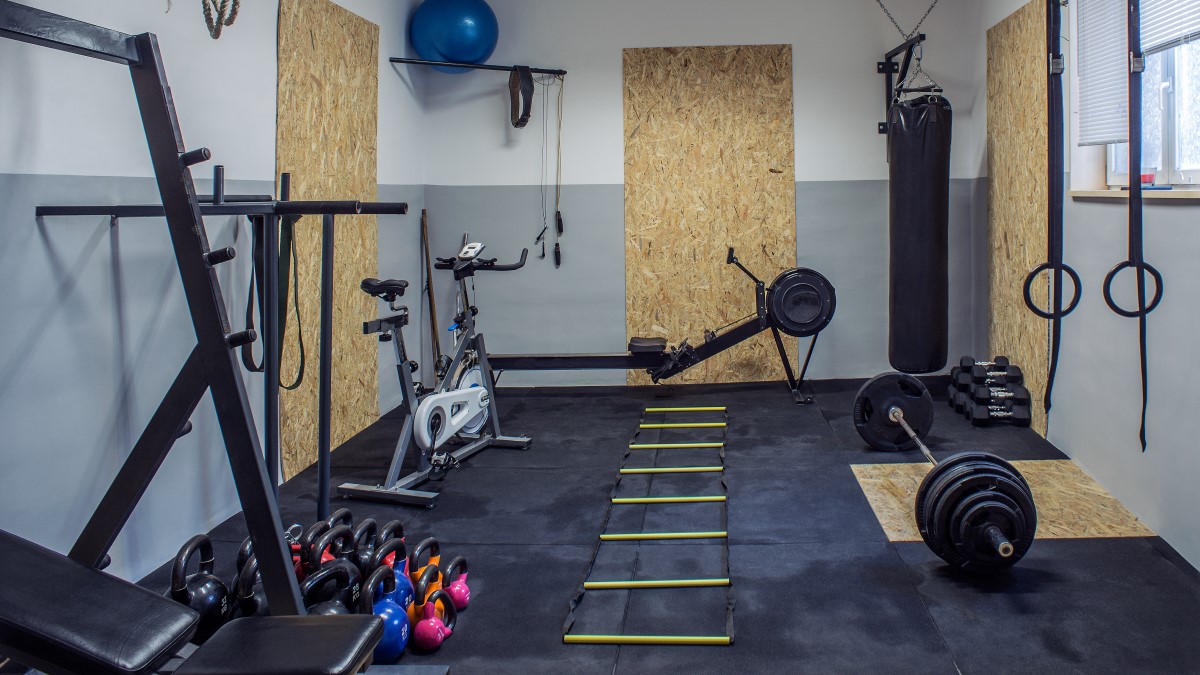
Image Source: www.tworepcave.com
Figuring Out Your Workout Space Needs
Before you even think about buying equipment, you need to consider your available space. This isn’t just about fitting in a machine; it’s about having enough room to move safely and effectively. Your workout space needs will depend on the types of exercises you plan to do and the equipment you want to use.
Assessing Your Current Space
Take a good look at the area you’re considering. Is it a spare bedroom, a corner of your living room, a portion of your garage, or a section of your basement? Measure the exact length and width of the space. Don’t forget to account for ceiling height, especially if you plan on doing any overhead exercises or using equipment like pull-up bars.
- Measure Carefully: Use a tape measure and write down the dimensions.
- Check Ceiling Height: This is crucial for exercises like overhead presses, jump squats, or using certain types of equipment.
- Consider Obstacles: Note any existing furniture, windows, doors, or support beams that might limit your layout.
Determining Your Fitness Goals
What kind of workouts do you enjoy? Your fitness goals play a huge role in determining how much space you need.
- Cardio Focused: If you primarily do cardio like running on a treadmill, cycling, or using an elliptical, you’ll need enough space for the machine itself, plus room to get on and off safely.
- Strength Training Focused: This often requires more space, especially for free weight exercises like squats, deadlifts, and bench presses. You’ll need room to maneuver weights and a clear area around you.
- Flexibility and Bodyweight: Yoga, Pilates, and bodyweight exercises generally require less space, mainly enough room for a yoga mat and to move your limbs.
- Hybrid Workouts: Most people aim for a mix. Think about the core exercises you want to perform and the equipment that supports them.
Minimum Home Gym Square Footage: What’s Truly Essential?
So, what’s the minimum home gym square footage you can get away with? It’s less about a magic number and more about functionality. For a basic setup, you might be surprised at how little you can start with.
The Absolute Bare Minimum
If you’re looking for a small home gym setup, you can likely get by with as little as 4×6 feet (24 sq ft). This is enough for:
- A yoga mat.
- A set of adjustable dumbbells.
- Resistance bands.
- A jump rope.
This is ideal for bodyweight training, yoga, and light resistance work. You’ll have enough space to unroll your mat and perform most exercises without feeling cramped.
A More Functional Minimalist Gym
For slightly more versatility, aiming for 6×8 feet (48 sq ft) opens up more possibilities. This space could accommodate:
- A basic adjustable dumbbell set.
- A kettlebell or two.
- A resistance band set.
- A yoga mat.
- Possibly a small adjustable bench.
You’d have more room to move around your weights and perform exercises like dumbbell rows or presses without feeling confined.
Creating a Home Gym: Space Considerations for Different Areas
The location of your home gym will heavily influence its potential size and the types of equipment you can install. Let’s look at common spaces.
Apartment Gym Space: Maximizing Compact Living
Living in an apartment often means tight quarters, but it doesn’t mean you can’t have a great apartment gym space. The key here is multi-functional equipment and smart storage.
- Vertical Space is Your Friend: Think wall-mounted pull-up bars, folding benches, and shelves for smaller items.
- Compact Equipment: Opt for adjustable dumbbells, kettlebells, resistance bands, and a good quality yoga mat.
- Consider Noise: If you have neighbors below, a thick rubber mat is essential to absorb impact and reduce noise. Avoid dropping weights.
- Folding Treadmills or Bikes: If cardio is a priority, look for foldable options that can be stored away.
Example Apartment Gym Layout (Approx. 5×7 ft):
| Equipment | Dimensions (Approx.) | Notes |
|---|---|---|
| Yoga Mat | 6 x 2 ft | Essential for floor work |
| Adjustable Dumbbells | 2 x 1 ft (storage) | Space to lift each side |
| Resistance Bands | Minimal | Can be stored easily |
| Jump Rope | Minimal | Requires overhead clearance |
| Folding Bench | 4 x 1.5 ft (open) | Stores against a wall when not in use |
| Total Sq Ft | 35 sq ft | Room to maneuver around equipment. |
This setup prioritizes versatility without taking up too much permanent floor space.
Garage Gym Layout: Unleashing More Potential
A garage offers more flexibility, often with higher ceilings and more floor space. A garage gym layout can range from a minimalist corner to a fully equipped powerhouse.
- Flooring is Key: Garages often have concrete floors. Invest in thick rubber mats to protect the floor, reduce noise, and provide cushioning.
- Utilize Wall Space: Wall-mounted racks, pull-up bars, and storage solutions are excellent for garages.
- Power Requirements: Consider if you’ll need extra outlets for treadmills, rowers, or sound systems.
- Climate Control: Garages can get hot or cold. If you plan to spend significant time here, consider insulation or a portable fan/heater.
Minimum Functional Garage Gym (Approx. 10×10 ft):
| Equipment | Dimensions (Approx.) | Notes |
|---|---|---|
| Power Rack/Squat Stand | 5 x 5 ft | Crucial for safe barbell work |
| Barbell and Weight Plates | 5 x 5 ft (storage) | Plates can be stored on a tree |
| Adjustable Bench | 4 x 2 ft | For various pressing and rowing movements |
| Dumbbell Set | 4 x 2 ft (storage) | Can be on a rack |
| Pull-up Bar | Wall mounted | Requires overhead clearance |
| Cardio Machine (Optional) | 6 x 3 ft | Treadmill, rower, etc. |
| Total Sq Ft | 100 sq ft | Allows comfortable movement and safety. |
A garage gym layout can easily expand to 12×15 ft or larger if space permits, allowing for more specialized equipment.
Basement Gym Requirements: Creating a Dedicated Zone
Basements are often ideal for home gyms due to their separation from main living areas and generally stable temperatures. Basement gym requirements focus on creating a dedicated, safe, and motivating environment.
- Ceiling Height: Most basements have ample ceiling height, but always check for low beams or ductwork.
- Flooring: Similar to garages, consider rubber flooring for impact absorption and protection.
- Lighting and Ventilation: Basements can be dim and stuffy. Good lighting and ventilation are crucial for a pleasant workout experience. Consider exhaust fans.
- Moisture Control: Ensure the basement is dry. Moisture can damage equipment and create an unhealthy environment.
Example Basement Gym Space (Approx. 12×15 ft):
| Equipment | Dimensions (Approx.) | Notes |
| :—————–0——- | :——————- | :——————————————————– |
| Power Rack | 6 x 5 ft | Plenty of space for unracking and safety catches |
| Barbell & Weight Plates | 6 x 5 ft (storage) | Room for weight trees and plate storage |
| Adjustable Bench | 4 x 2 ft | Positioned for easy access to the rack |
| Dumbbell Set | 5 x 3 ft (storage) | rack takes up space but keeps things organized |
| Kettlebell Rack | 3 x 2 ft | Organizes kettlebells |
| Cable Machine/Functional Trainer | 6 x 4 ft | Requires clearance for movement and cable travel |
| Cardio Machine (e.g., Rower) | 7 x 3 ft | Needs clearance for full range of motion |
* Total Sq Ft: 180 sq ft | Layout Flexibility | This allows for multiple pieces of equipment and freedom to move. |
With 180 sq ft, you can comfortably fit several major pieces of equipment and still have ample space for stretching, warm-ups, and cool-downs.
Home Gym Equipment Placement: Making the Most of Your Space
Once you have an idea of your space and your goals, home gym equipment placement becomes key to creating a functional and safe workout area.
Creating Zones
Think about dividing your space into zones:
- Free Weight Zone: Where you’ll do squats, deadlifts, presses. This area needs the most clear space.
- Cardio Zone: Where your treadmill, bike, or rower will go.
- Stretching/Yoga Zone: A clear floor space for mat work.
- Storage Zone: For dumbbells, plates, bands, and accessories.
Safety First!
- Clearance: Ensure there’s at least 2-3 feet of clearance around all sides of major equipment like racks and benches.
- Headroom: Always ensure you have sufficient headroom for overhead movements.
- Trip Hazards: Keep cables and mats organized to avoid tripping.
- Weight Storage: Store weights securely and out of the main walking paths.
Optimizing Flow
- Logical Layout: Place equipment in a way that makes sense for your workout routine. For instance, if you often superset dumbbell rows with bench presses, place your dumbbells near your bench.
- Accessibility: Ensure you can easily access all your equipment without having to move other items.
Optimal Home Gym Size: What’s the Ideal?
While you can make do with less, an optimal home gym size allows for maximum variety, safety, and comfort. Generally, aiming for 100-200 sq ft provides a very well-rounded and functional space.
- 100 sq ft: Allows for a good selection of free weights, a bench, a pull-up bar, and a small cardio machine, with decent movement space.
- 150 sq ft: Offers more room for larger cardio equipment, a wider selection of dumbbells, and potentially a functional trainer or cable machine.
- 200+ sq ft: This is where you can really start to build a serious home gym, accommodating multiple large pieces of equipment, ample storage, and dedicated zones for different training styles.
Key Considerations for Optimal Space
- Equipment Choice: The specific pieces of equipment you choose will dictate your needs. A power rack is significantly larger than a set of resistance bands.
- Movement Space: Always factor in the space needed to perform exercises with good form and without restriction. This often means adding 5-10 feet in each direction around your primary equipment.
- Future Growth: If you plan to expand your home gym over time, consider a slightly larger space initially to accommodate future purchases.
Factors Influencing Your Home Gym Space Requirements
Let’s break down the specific elements that influence how much space you’ll actually need.
1. Type of Exercise Equipment
This is arguably the biggest determinant.
- Bodyweight/Yoga Mats: The smallest requirement. A 6×4 ft area is usually sufficient.
- Dumbbells/Kettlebells: You need space to lift them. A 8×8 ft area can accommodate a good set and allow for exercises like lunges and dumbbell rows.
- Barbell and Rack: This is where space needs increase significantly.
- Squat Stand: Requires roughly 5×5 ft clear space.
- Power Rack/Half Rack: Typically needs 6×6 ft to 7×8 ft, including safety arms and space to get in and out.
- Full Rack (with pull-up bar, dip attachments): Can be 7×8 ft or larger.
- Bench: A standard adjustable bench is about 4-5 ft long and 1-2 ft wide. You need space to move around it.
- Cardio Machines:
- Treadmill: Can be 6-7 ft long and 2-3 ft wide. Many fold up, reducing their footprint when not in use. Always allow 2-3 ft behind and to the sides for safety.
- Stationary Bike (Upright/Spin): Typically 3-4 ft long and 2 ft wide.
- Elliptical: Can be longer, around 5-6 ft, and requires clearance.
- Rowing Machine: Often 7-8 ft long when in use but can be stored vertically.
- Cable Machines/Functional Trainers: These require the most space as they involve movement in multiple directions. A footprint of 6×5 ft is minimum, but you need additional clearance for cable travel, usually an extra 5-10 ft in front.
2. Range of Motion and Movement Space
Don’t just think about the equipment’s footprint. Think about the space needed to use the equipment.
- Squats: You need to be able to squat down without hitting anything. This means at least 3-4 ft in front and behind your feet.
- Deadlifts: Similar to squats, you need ample space in front of you to pull the weight.
- Bench Press: When lying on the bench, you’ll be extending your arms and need space around you.
- Cable Exercises: The cable needs to travel. Ensure there’s enough space for the pulleys to move freely without obstruction.
3. Storage Solutions
Where will you keep your weights, bands, mats, and other accessories?
- Weight Tree: For plates, requires a small footprint but adds to overall gym area.
- Dumbbell Rack: Can be a significant space saver, organizing dumbbells neatly.
- Wall Shelves: Great for smaller items like resistance bands, jump ropes, and grips.
- Storage Bins: Useful for accessories.
Efficient storage can free up valuable floor space.
4. Personal Preferences and Workout Style
Some people like a minimalist setup, while others enjoy a more robust gym environment.
- Open Space: Do you prefer a lot of open floor space for dynamic movements or circuit training?
- Dedicated Zones: Do you want separate areas for lifting, cardio, and stretching?
- Aesthetics: Do you want room for mirrors, posters, or a sound system?
These personal touches can influence the overall perceived space needed.
Calculating Your Home Gym Space Needs: A Practical Approach
Let’s get down to practical calculations.
Step 1: List Your Must-Have Equipment
Start with the core pieces of equipment you absolutely want.
Step 2: Research Equipment Dimensions
Find the exact dimensions (width, depth, height) of your chosen equipment. Remember to include any necessary clearances specified by the manufacturer.
Step 3: Map Out Your Layout
Use graph paper, a floor planning app, or even just tape on your floor to visualize the layout.
Step 4: Add Movement Space
For each piece of equipment, add the recommended clearance for safe and effective use.
- Around Racks/Benches: 2-3 ft on sides, 3-4 ft in front.
- For Cardio: 2-3 ft behind and to the sides.
- For Barbell Lifts: 4-5 ft in front and behind.
Step 5: Account for Storage and Walkways
Ensure you have clear paths to move between equipment and designated spots for storage.
Example Calculation: Small Home Gym (Apartment Corner)
- Equipment: Adjustable Dumbbells, Resistance Bands, Yoga Mat, Jump Rope.
- Space Needed:
- Yoga Mat: 6 ft x 2 ft = 12 sq ft
- Dumbbell Area (lifting space): 4 ft x 3 ft = 12 sq ft
- Storage (dumbbells when not in use): 2 ft x 1 ft = 2 sq ft
- Movement/Clearance: Add ~10-15 sq ft for general movement.
- Total: Roughly 36-41 sq ft. A 6×7 ft (42 sq ft) space would be comfortable.
Example Calculation: Intermediate Home Gym (Garage)
- Equipment: Power Rack, Adjustable Bench, Barbell, Weight Plates, Dumbbells, Rower.
- Space Needed:
- Power Rack: 6 ft x 6 ft = 36 sq ft (with safety clearance)
- Bench: 4 ft x 2 ft = 8 sq ft (needs to be movable but can be near rack)
- Barbell & Plates (on tree): 3 ft x 3 ft = 9 sq ft
- Dumbbell Rack: 4 ft x 2 ft = 8 sq ft
- Rower: 7 ft x 3 ft = 21 sq ft (can be stored vertically)
- Movement/Walkways: Add 40-50 sq ft for overall flow.
- Total: Roughly 122-132 sq ft. An 10×12 ft (120 sq ft) space is a good minimum, but 10×15 ft (150 sq ft) would be more ideal for comfort.
FAQ: Your Home Gym Space Questions Answered
Q: Can I have a home gym in a small bedroom?
A: Absolutely! A small bedroom can be transformed into a functional home gym by choosing compact, multi-functional equipment like adjustable dumbbells, resistance bands, and a foldable bench. Utilize vertical space for storage and consider a good quality exercise mat to protect the flooring.
Q: What is the minimum ceiling height for a home gym?
A: For most basic workouts, 7 feet is the absolute minimum. However, if you plan on doing overhead presses, pull-ups, or using equipment like squat racks, 8 feet or higher is strongly recommended to ensure safety and prevent hitting your head.
Q: How much space do I need for a power rack?
A: A typical power rack requires at least a 6×6 foot footprint. However, you’ll want an additional 2-3 feet of clearance on the sides and 3-4 feet in front to safely get in and out, rack weights, and use safety catches. So, a 10×10 foot space is a comfortable minimum for a rack setup.
Q: Is 50 square feet enough for a home gym?
A: Yes, 50 square feet can be enough for a very functional home gym, especially for bodyweight training, yoga, and using dumbbells and resistance bands. It’s a good size for a small home gym setup or an apartment gym space. You’ll need to be strategic with your equipment and storage.
Q: How important is flooring in a home gym?
A: Flooring is very important, especially if you’re in an apartment or have a concrete floor. Thick rubber mats (interlocking tiles or rolls) protect your existing floor, absorb impact, reduce noise, provide cushioning for your joints, and offer better grip.
Q: Do I need a separate room for my home gym?
A: Not necessarily. While a dedicated room is ideal, you can create a home gym in a corner of a living room, a spare bedroom, a basement, or a garage. The key is to define the space and ensure it’s safe and functional for your workouts.
Q: What are the best home gym equipment placement tips?
A: Place frequently used items close together. Ensure clear walkways between equipment. Keep heavy items like racks and benches against walls or in corners to maximize open floor space. Prioritize safety by ensuring adequate clearance around all equipment. Store smaller items neatly to avoid trip hazards.
Q: How much space is ideal for dumbbell workouts?
A: For dumbbell workouts, you’ll need enough space to comfortably stand, move your feet, and extend your arms during exercises like lunges, rows, and presses. An area of at least 8×8 feet allows for good movement and space to store your dumbbells.
Q: Can I fit a treadmill and a weight rack in the same 10×12 foot room?
A: It’s possible, but it will be tight. You’ll need to carefully plan your garage gym layout or basement gym space. Place the rack against a wall and the treadmill in a position that allows for safe entry/exit and access to the rack. Opt for folding treadmills and compact racks if possible.
Q: What’s the difference between a home gym and a garage gym?
A: The terms are often used interchangeably, but “garage gym” specifically refers to a home gym set up in a garage. Garage gym layout considerations often include dealing with concrete floors, potential temperature fluctuations, and ample space.
By carefully considering your fitness goals, available space, and the specific requirements of your chosen equipment, you can successfully create a home gym that meets your needs, no matter how much room you have. Happy training!