
Can you dump old gasoline down the drain? No, absolutely not. Old gasoline is a flammable liquid disposal hazard and should never be poured down drains, into sewers, or onto the ground. Improper disposal can contaminate soil and water, harm wildlife, and even create fire or explosion risks. This guide will walk you through the safe and responsible ways to handle old gas at home.
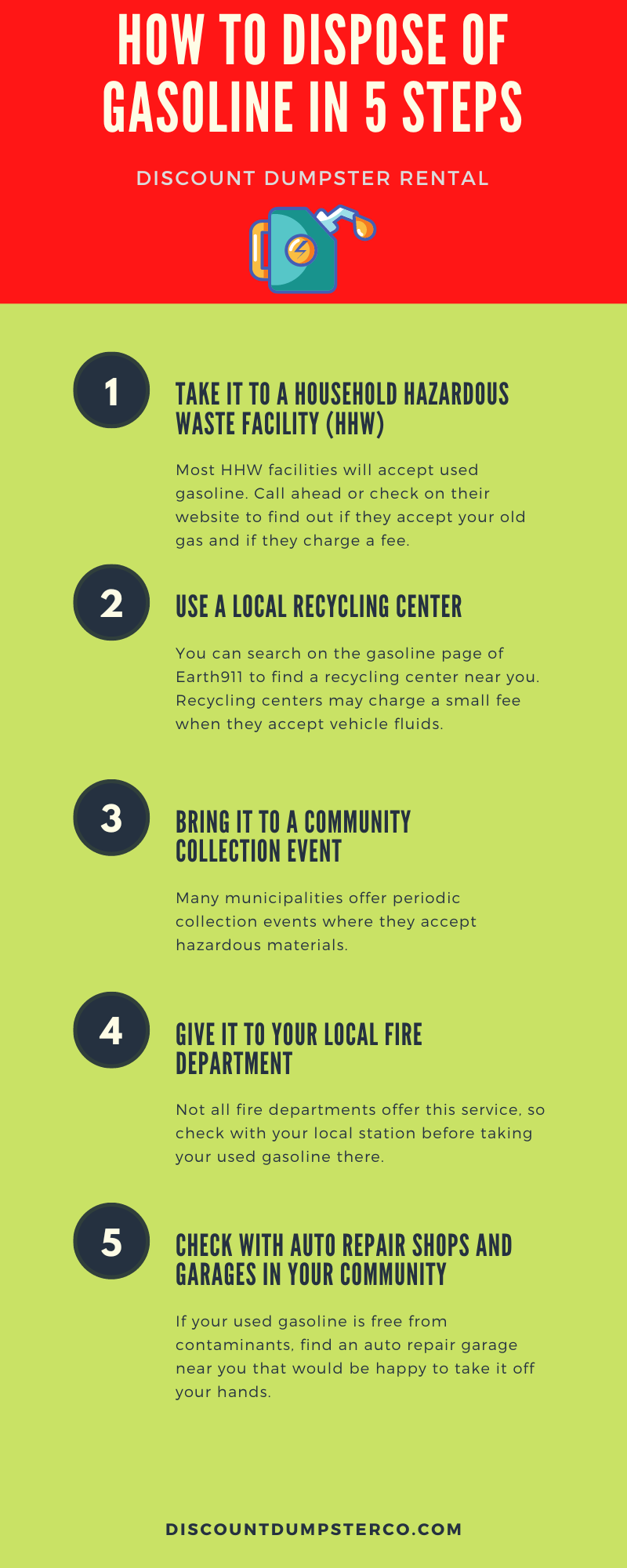
Image Source: discountdumpsterco.com
Why Proper Fuel Disposal Matters
Old fuel, often referred to as old gas, can become less effective over time. It can lose its octane rating and develop contaminants that can damage engines. More importantly, it’s a flammable liquid disposal challenge. Gasoline is highly volatile, and its vapors can ignite easily, posing a significant fire risk. Simply throwing it away or pouring it out is dangerous and harmful to the environment. Proper gasoline disposal is crucial for safety and environmental protection.
The Risks of Old Fuel
- Fire Hazard: Gasoline vapors are highly flammable. Any spark or open flame can cause ignition, leading to a dangerous fire.
- Environmental Contamination: Gasoline contains chemicals that are toxic to plants, animals, and humans. When it seeps into the soil or water, it can cause long-term damage.
- Engine Damage: Using old, degraded fuel in engines can lead to poor performance, starting problems, and internal damage.
Identifying Old Gas
How do you know if your gasoline is old and needs proper fuel disposal? Gasoline typically has a shelf life. While this can vary depending on storage conditions, generally, gasoline starts to degrade after about 3-6 months when stored in a sealed container at room temperature.
Signs Your Gas is Old
- Cloudy or Discolored Appearance: Fresh gasoline is usually clear or has a slight yellow tint. Old gasoline might appear cloudy, milky, or have a darker color.
- Varnish or Gum Formation: Over time, gasoline can break down and form sticky residues or varnishes. You might see these deposits in the fuel can or on engine parts if the fuel has been used.
- Foul Odor: While gasoline has a strong smell, old gasoline can develop an even more pungent, acrid odor due to its breakdown products.
- Engine Performance Issues: If you’ve used fuel from an old can and notice rough idling, stalling, or difficulty starting, the fuel may have degraded.
Safe Fuel Storage: Preventing the Problem
The best approach to fuel disposal is to minimize the amount of old fuel you accumulate. Practicing safe fuel storage is key.
Best Practices for Storing Gasoline
- Use Approved Containers: Always store gasoline in U.S. Department of Transportation (DOT) approved portable gasoline containers. These containers are designed to be safe for flammable liquids.
- Seal Tightly: Ensure the container lid is tightly sealed to prevent vapors from escaping and to keep out moisture and contaminants.
- Cool, Dry Place: Store gasoline in a cool, dry, well-ventilated area, away from any heat sources, sparks, or open flames. A detached shed or garage is often a good option, but avoid storing it near water heaters or furnaces.
- Proper Ventilation: Good airflow is essential to prevent the buildup of flammable vapors.
- Avoid Storing in Homes: Never store gasoline inside your living space, basement, or attached garage.
- Consider Fuel Stabilizers: If you anticipate storing gasoline for longer periods (e.g., for a generator during hurricane season), consider using a fuel stabilizer. These additives can extend the shelf life of gasoline significantly.
Safe Disposal Methods for Old Gas
When you have old fuel that needs gasoline disposal, safety and legality are paramount. Here are the approved methods for residential disposal.
1. Contact Your Local Hazardous Waste Facility
This is the most recommended and environmentally sound method for fuel disposal.
- What to Do:
- Locate Your Facility: Search online for “[Your City/County] hazardous waste disposal” or “[Your City/County] household hazardous waste collection.” Many municipalities have designated drop-off sites or schedule periodic collection events.
- Prepare the Fuel: Keep the old gas in its original, approved container or another sturdy, sealed container clearly labeled “Old Gasoline” or “Waste Gasoline.”
- Transport Safely: Secure the container upright in your vehicle, preferably in the trunk or truck bed, to prevent tipping. Ensure good ventilation in your vehicle during transport.
- Follow Facility Guidelines: Adhere to all instructions provided by the hazardous waste facility regarding drop-off times, accepted quantities, and container requirements.
2. Gasoline Disposal Services
Some private companies specialize in the pickup and disposal of hazardous materials, including old fuel.
- What to Do:
- Find a Service: Search for “hazardous waste disposal services” or “fuel disposal services” in your area.
- Inquire About Services: Contact potential services to confirm they handle gasoline disposal for residential customers and to understand their pricing and scheduling.
- Follow Their Instructions: They will provide specific instructions on how to package and prepare the fuel for pickup.
3. Fuel Recycling Programs
While less common for small residential quantities, some areas might have specific fuel recycling programs. These programs aim to process waste fuel for reuse or safe breakdown.
- What to Do:
- Check Local Resources: Your local waste management authority or environmental agency might have information on available fuel recycling options.
- Follow Program Guidelines: If a program exists, follow their specific collection and drop-off procedures.
4. Small Quantity Use (with extreme caution)
If you have a very small amount of slightly old gasoline (not contaminated or severely degraded), you might be able to use it in older, less sensitive equipment, but this carries risks and is not ideal.
- When to Consider This:
- You have only a quart or two.
- The fuel is only a few months old and looks and smells relatively normal.
- You are using it in equipment that is not particularly sensitive to fuel quality (e.g., an old lawnmower that you don’t rely on heavily).
- How to Do It:
- Mix with Fresh Fuel: Dilute the old gas by mixing it with a larger quantity of fresh, high-quality gasoline. A common ratio is 1 part old gas to 5 parts fresh gas.
- Use in Less Sensitive Equipment: Try it in equipment that is easy to start and doesn’t require precise fuel mixtures.
- Monitor Performance: Pay close attention to how the engine runs. If it sputters, hesitates, or runs poorly, remove the fuel and use a proper disposal method.
- When NOT to Consider This:
- The fuel is visibly contaminated, cloudy, or has a very bad odor.
- You have a large quantity of old gas.
- You are using it in high-performance engines, fuel-injected vehicles, or modern equipment.
- You are unsure about the fuel’s condition.
Important Note: This method is a last resort and should be approached with extreme caution. Proper fuel disposal at a hazardous waste facility is always the preferred and safest option.
What NOT to Do with Old Gas
Understanding what not to do is just as important as knowing the correct methods.
Never Do These Things:
- Pour Down Drains or Toilets: This contaminates water systems and can damage plumbing.
- Pour on the Ground: This pollutes soil and groundwater, harming ecosystems.
- Put in Regular Trash: Landfills are not equipped to handle flammable liquids, posing fire and environmental risks.
- Burn It: Burning gasoline releases toxic fumes and is an uncontrolled fire hazard.
- Mix Large Amounts with Fresh Fuel for Cars: Modern car engines are very sensitive. Using old fuel, even mixed, can lead to expensive engine damage.
Common Scenarios for Old Gas
- Seasonal Equipment: Lawn mowers, snow blowers, and other equipment used only part of the year often end up with leftover fuel.
- Boating and Recreation: Outboard motors and recreational vehicles can leave behind old gasoline.
- Emergency Preparedness: People who buy gasoline for generators may have old fuel left over after an emergency.
- Car Enthusiasts: Those who work on classic cars or use fuel stabilizers might accumulate small amounts of old fuel.
In all these cases, proper fuel disposal is essential.
Handling Contaminated Fuel
Sometimes, gasoline can become contaminated with water, dirt, or other substances.
Water Contamination
Water in gasoline can cause severe engine problems. If you suspect water contamination, the fuel must be disposed of as hazardous waste. Do not attempt to separate the water; it’s ineffective and unsafe.
Dirt or Debris
If dirt or debris has entered the fuel can, it can clog fuel filters and carburetors. This fuel also requires gasoline disposal services or a hazardous waste facility.
Local Regulations and Resources
Residential disposal rules can vary by location. It’s always a good idea to check with your local authorities.
Where to Find Information:
- City or County Waste Management Department: This is your primary resource for local hazardous waste disposal information.
- State Environmental Protection Agency (EPA): Your state’s EPA website often provides broader guidance and links to local resources.
- Local Fire Department: While they don’t typically handle disposal, they can advise on safety regulations concerning flammable liquids.
The Environmental Impact of Improper Disposal
When old fuel isn’t handled correctly, the consequences can be severe:
- Water Pollution: Gasoline can contaminate rivers, lakes, and groundwater. This can make water unsafe to drink and harm aquatic life.
- Soil Contamination: Spilled gasoline can render soil infertile and require extensive, costly cleanup.
- Air Pollution: Burning or evaporating gasoline releases volatile organic compounds (VOCs) into the atmosphere, contributing to smog and air quality issues.
Summary Table: Best Practices for Old Gas Disposal
| Method | Best For | Pros | Cons |
|---|---|---|---|
| Hazardous Waste Facility | Most quantities, all types of old gas | Safest, most environmentally friendly, legally compliant. | Requires transport, may have specific drop-off times/days. |
| Gasoline Disposal Services | Larger quantities, convenience | Pickup service, professional handling. | Can be more expensive, availability may vary by location. |
| Fuel Recycling Programs | Specific local availability | Environmentally conscious, potential reuse. | Less common for residential users, may have strict acceptance criteria. |
| Small Quantity Use (Diluted) | Very small, slightly old amounts | Reduces waste if done carefully. | Risky, can damage engines, not environmentally ideal, not recommended. |
Frequently Asked Questions (FAQ)
Q1: How long does gasoline last?
A1: Gasoline typically lasts 3-6 months when stored in a sealed container at room temperature. Factors like temperature, container type, and the presence of stabilizers can affect its shelf life.
Q2: Can I mix old gas with new gas for my car?
A2: It’s generally not recommended to mix significant amounts of old, degraded gasoline with new fuel for your car. Modern engines are sensitive, and this can lead to performance issues or damage. For very small, slightly old quantities, a significant dilution with fresh fuel might be acceptable in older, less sensitive equipment, but proper disposal is always the safest bet.
Q3: What if my gasoline container is rusted or leaking?
A3: If your gasoline container is damaged, transfer the fuel to a new, approved container immediately. Handle the damaged container as hazardous waste, following the guidelines for proper fuel disposal.
Q4: Can I give my old gas to someone else?
A4: It is strongly discouraged. You don’t know the condition of the recipient’s equipment, and they may not be aware of the risks. Always dispose of old fuel through approved fuel disposal channels.
Q5: What are the signs of gasoline contamination?
A5: Signs include a cloudy or discolored appearance, a strong acrid odor, or the presence of visible particles or water. If you notice any of these, treat the fuel as hazardous waste.
Q6: Are there specific companies that offer gasoline disposal services?
A6: Yes, many private hazardous waste management companies offer gasoline disposal services for both commercial and residential customers. A quick online search for “hazardous waste pickup” or “fuel disposal services near me” will help you find them.
Q7: What should I do if I spill a small amount of gasoline?
A7: If a small amount spills, ventilate the area immediately. Absorb the spill with an absorbent material like kitty litter or sawdust (avoid oily rags). Place the contaminated absorbent material in a sealed metal container and take it to your local hazardous waste facility. Never use water to clean up gasoline spills, as it can spread the contamination.
By following these guidelines, you can ensure that your old fuel is handled safely and responsibly, protecting both your property and the environment. Remember, when in doubt, always opt for the safest disposal method available through your local hazardous waste collection resources.